
AI agent development has spent the last year split across too many half-connected surfaces: one tool to prototype prompts, another to debug orchestration, another to wire tools, and then an entirely different path to deploy something production-shaped. Microsoft’s April push around Microsoft Agent Framework 1.0 and Foundry Toolkit for VS Code is the clearest sign yet that the company knows this fragmentation is a product problem, not just a documentation problem.
Agent Framework 1.0 Is About Consolidation
Microsoft describes Agent Framework 1.0 as the stable release that unifies the enterprise patterns of Semantic Kernel with the multi-agent orchestration ideas popularized by AutoGen under one runtime and SDK story. The local-to-production launch post also says the framework is stable across Python and .NET, supports multiple model providers, and treats Foundry services such as memory, hosted agents, observability, and tools as native building blocks.
That follows the groundwork laid in February, when Microsoft Agent Framework reached release-candidate status and locked down major API decisions around credentials, sessions, and response handling before the 1.0 push. In practice, that means enterprise teams can now treat the framework as something to standardize on, not just something to experiment with.
Foundry Toolkit Changes the Developer Surface
The naming change from AI Toolkit to Microsoft Foundry Toolkit would not matter by itself. What matters is the GA feature set. Microsoft’s VS Code announcement says the extension now combines a model playground, no-code and low-code Agent Builder, Copilot-assisted agent generation, Agent Inspector debugging, and direct deployment to Agent Service without leaving the editor.
That matters because agent development is unusually sensitive to context switching. If you can create an agent, attach tools, watch traces, debug multi-step execution, and then deploy from one place, you remove a large amount of workflow friction that usually gets hidden under the label of “developer productivity” but actually affects architecture choices.
The Interesting Part Is the Runtime Bridge
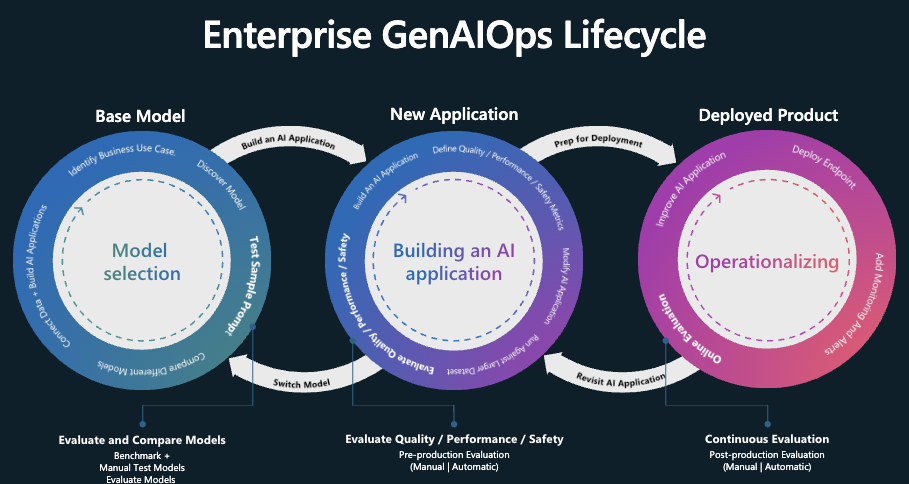
The April announcement is not just about tooling polish. It introduces a cleaner bridge between local execution and hosted runtime. Developers can start with local shell harnesses and approval flows, move to hosted shell execution, add context compaction, and then deploy to hosted agents in Foundry Agent Service with `azd deploy` without rewriting the entire mental model.
That bridge matters because it acknowledges what many teams are already doing: building serious agent behavior locally first, then fighting a deployment cliff when the prototype has to inherit identity, scaling, observability, and promotion workflows. Foundry is trying to turn that cliff into a slope.
Memory and Tools Stop Being Custom Plumbing
The launch also strengthens the case that Foundry wants to own the cross-cutting parts of agent systems, not just model inference. Managed memory is now integrated with Microsoft Agent Framework and LangGraph, while Toolbox gives developers a curated, reusable MCP-compatible tool surface that can be consumed across runtimes as part of the same workflow.
The memory concepts page is useful here because it clarifies what Microsoft means by memory: long-term extracted knowledge, not just session history, with explicit user-profile and chat-summary patterns for cross-session continuity. That is the sort of managed primitive teams usually bolt on after discovering they do not want to operate yet another vector-backed state layer themselves.
The Remaining Challenge Is Team Discipline
None of this removes the need for good engineering judgment. Agent Framework gives teams more orchestration power, and Foundry Toolkit makes it easier to generate agents quickly, but fast generation is not the same as sound system design. The value will come from using the shared tooling to enforce repeatable patterns for prompts, tools, evaluation, and deployment, not from creating more unreviewed agents faster.
Still, this is the first time Microsoft’s agent story feels structurally coherent. The framework, the editor experience, the runtime, and the observability stack are starting to look like parts of the same product instead of adjacent announcements.
Conclusion
Microsoft Agent Framework 1.0 and Foundry Toolkit matter because they reduce the gap between agent experimentation and agent operations. That gap is where a lot of otherwise-promising projects stall.
If Microsoft keeps improving the editor-to-runtime bridge, Foundry could end up winning less by having the fanciest agent abstractions and more by making the entire development lifecycle feel normal. That is a surprisingly powerful advantage.

Chris Wan
Microsoft Certified Trainer (MCT)
Application Architect, SOS Group Limited